Tommy Hilfiger’s Spring 2027 Show Gives Plaza Prep a Playful Reset

Tommy Hilfiger’s Spring 2027 show took over New York’s Plaza Hotel on September 10, pairing a landmark address with a deliberately relaxed version of preppy dressing. Gigi Hadid opened the runway and Romeo Beckham closed it, while a guest list spanning fashion, music and entertainment helped turn the presentation into one of the week’s conspicuous celebrity gatherings. The clothes, though, had a recognizable point of departure: familiar staples made less formal.
The setting carried a personal connection for the designer, who previously lived at the Plaza with his family. Rather than using that history to stage a purely nostalgic presentation, the collection played with the scale and combinations of established wardrobe pieces. Blazers, polo shirts, stripes and collegiate references remained easy to identify, but the styling loosened their associations with a fixed dress code.
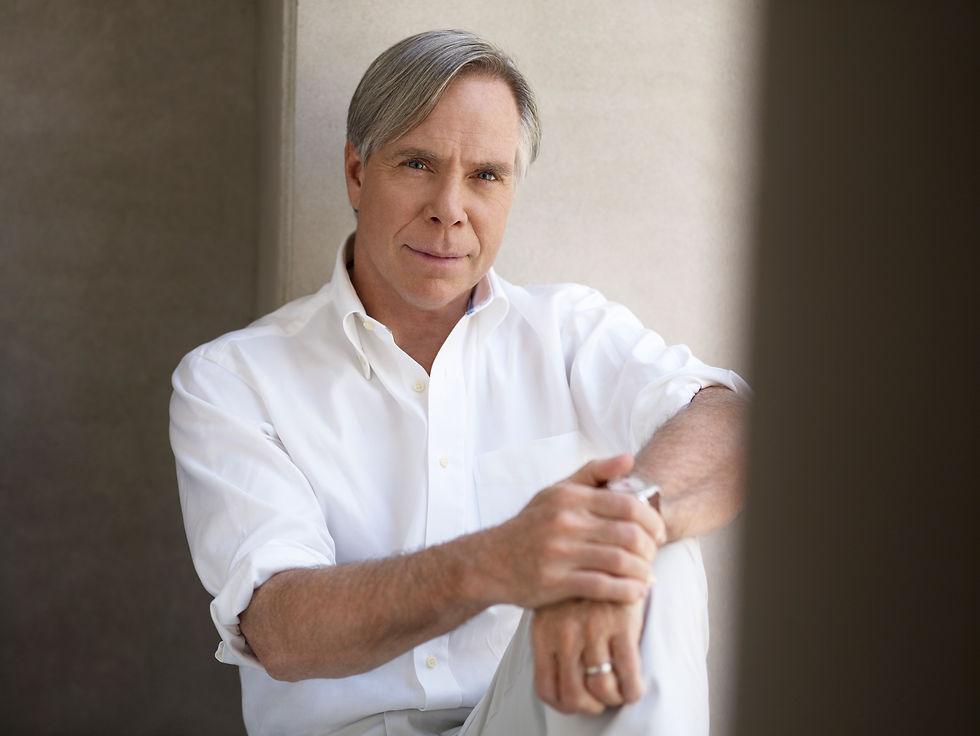
Archival portrait of Tommy Hilfiger, 2009. Photo: Tommy Hilfiger / CC BY-SA 2.0. Display size adjusted.
Hadid’s opening look made that approach clear. V Magazine described oversized red trousers paired with a tan blazer, an outfit that used proportion and color to shift tailoring away from office uniformity. Beckham’s closing appearance included an oversized plaid tie. These were not examples of abandoning prep altogether; they showed how a familiar element could become the focal point when its size or placement changed.
The wider collection moved between shrunken and oversized polos, rugby dresses, tartan blazers and Ivy-inspired jackets. Oxford and Ithaca stripes supplied another recognizable reference, while high-cut chino shorts changed the balance of the silhouette. The result, as presented in the runway coverage, was less about assembling a perfectly matched collegiate outfit than allowing individual pieces to interrupt one another.
Color reinforced that shift. Red, white and blue remained central, but yellow and green broadened the palette beyond the most predictable Hilfiger combination. Against the hotel setting, the brighter choices and altered proportions gave the clothes a more youthful register. The contrast was part of the presentation’s interest: a highly established New York address hosting a collection that treated inherited style codes with considerably less ceremony.
Accessories kept the argument grounded in everyday dressing. The lineup included totes and footwear ranging from skate sneakers and boat shoes to penny loafers and leather slides. That range matters more than declaring one shoe the winner of an entire season. It offers different ways to finish the same broad wardrobe idea, from casual to more polished, without requiring every element of an outfit to point in the same direction.
The front row made its own statement about the audiences around the brand. Kate Moss, Camila Cabello and JISOO were among the guests, alongside Girls’ Generation members Hyoyeon, Yuri and Sooyoung. Their presence connected an American fashion presentation to several distinct entertainment followings. Attendance should not be mistaken for a newly announced collaboration, but it explains why the event reached beyond the people primarily following runway collections.
V Magazine’s account also placed Suni Lee, Winnie Harlow and Victoria Monét among the attendees. A show like this creates more than one kind of fashion image: the designer’s coordinated runway narrative and the individual choices of guests arriving to watch it. Those are related parts of the event, but they are not interchangeable evidence of what belongs to the collection itself.
Music formed part of the presentation rather than remaining background atmosphere. Matt Jones led the orchestral component, and Slayyyter performed Dance for the finale. The closing performance gave the event a pop endpoint after the succession of runway looks. It also continued Hilfiger’s use of entertainment alongside clothes without making the collection’s appeal dependent on any one guest’s appearance.
For readers interested in adapting the styling rather than recreating a runway photograph, the most useful takeaway is proportion. A roomier trouser changes the effect of a blazer; an exaggerated tie draws attention to a familiar shirt-and-jacket combination. That is an interpretation of the looks shown, not a prediction that everyone will dress this way next spring. The appeal lies in choices that can be understood one outfit at a time.
The season label is worth keeping in view as well. This was a Spring 2027 presentation shown during September’s New York Fashion Week, not a declaration that every runway piece is already on sale. The coverage establishes the collection’s direction and the event’s participants. It does not, by itself, establish retail availability, prices or whether a particular look will be offered exactly as it appeared on the runway.
The Plaza show ultimately made its case through contrast: polished surroundings and relaxed shapes, heritage references and playful scale, a familiar American label and an internationally recognizable audience. Hadid’s opening and Beckham’s closing supplied the celebrity punctuation, but the collection’s more useful idea was in between. Prep did not need to disappear to feel different; its pieces needed room to be worn with a little less predictability.
Related coverage: Armani Beauty Turns Its Ninth Venice Film Festival Sponsorship Into a Global Beauty Stage, PinkPantheress Leads UGG’s Fall 2026 ‘Born to Feel’ Campaign Alongside Rowan Blanchard and Tyla Leads Kate Spade’s Fall Campaign With a Search for Everyday Joy.


Comments